WP.29 adopts amendments to UN Regulation No. 78 and GTR No. 3 to update and harmonize Motorcycle Braking Requirements
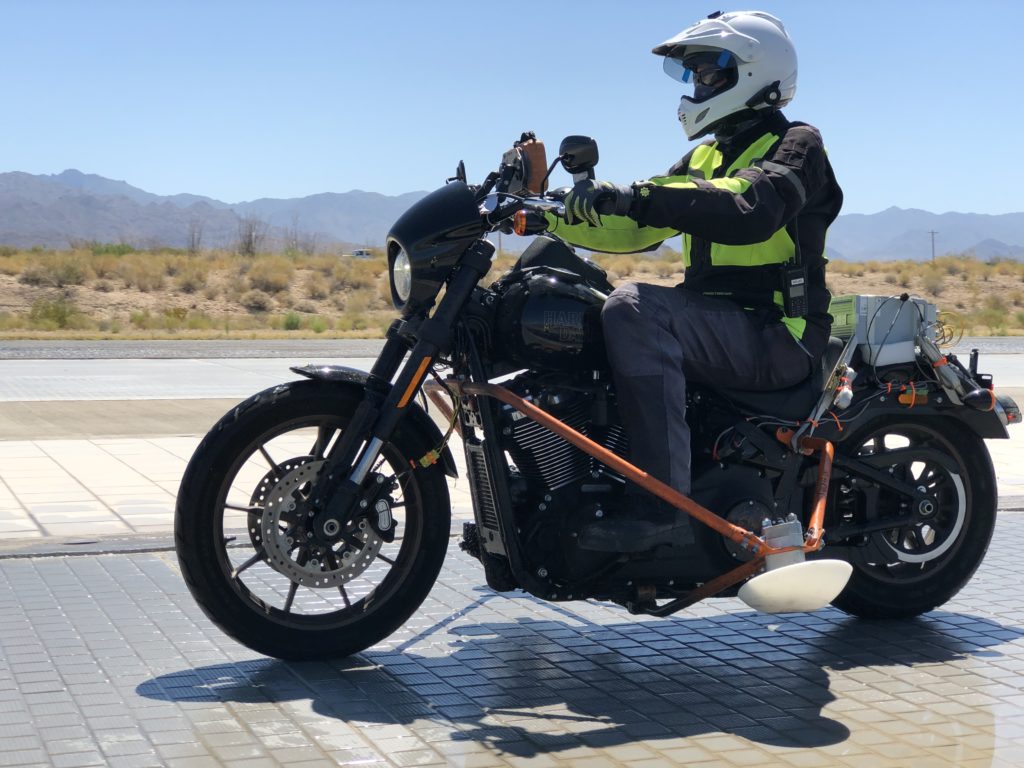
When it comes to motorcycle braking, UN Regulation No. 78 and Global Technical Regulation (GTR) No. 3 play an essential international role, as they are widely adopted and applied by governmental organizations around the world. It is therefore fundamental that both regulations are continuously updated with the latest safety developments and that the two legal documents are harmonized with compatible requirements.
Mr Rakesh Sharma, ED, Bajaj Auto takes over as IMMA’s President
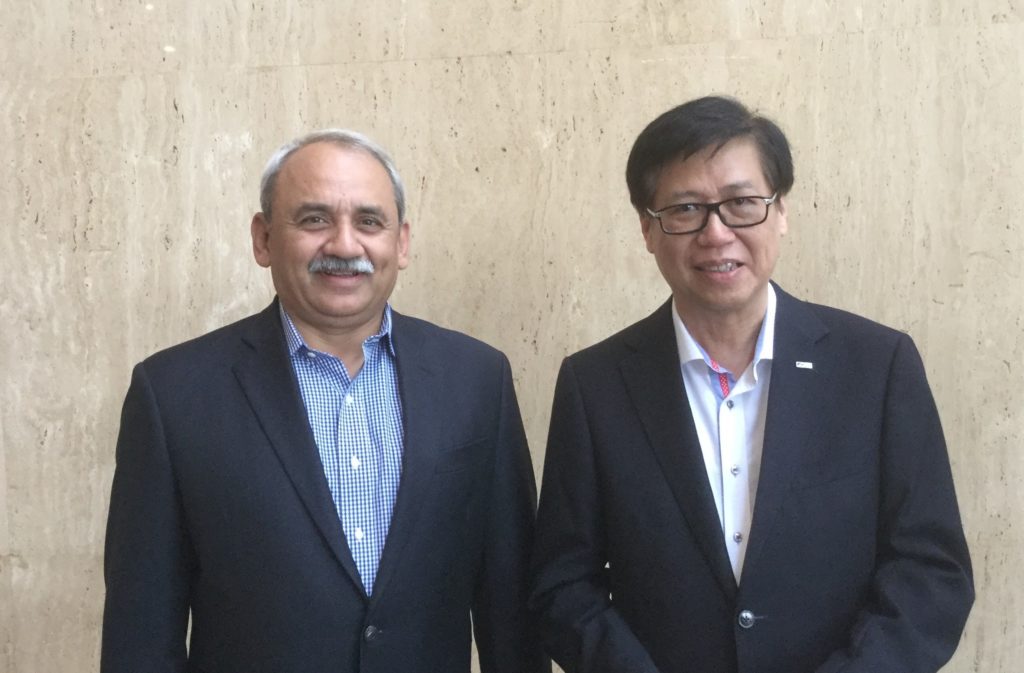
The International Motorcycle Manufacturers Association (IMMA), the voice of the global motorcycle industry, has elected Mr Rakesh Sharma, Executive Director, Bajaj Auto from its member organisation SIAM, the Society of Indian Automobile Manufacturers for a 2-year mandate, as President of IMMA.
Addressing the safety of Powered Two Wheelers during the 3rd Global Ministerial Conference on road safety ‘Achieving Global Goals 2030’
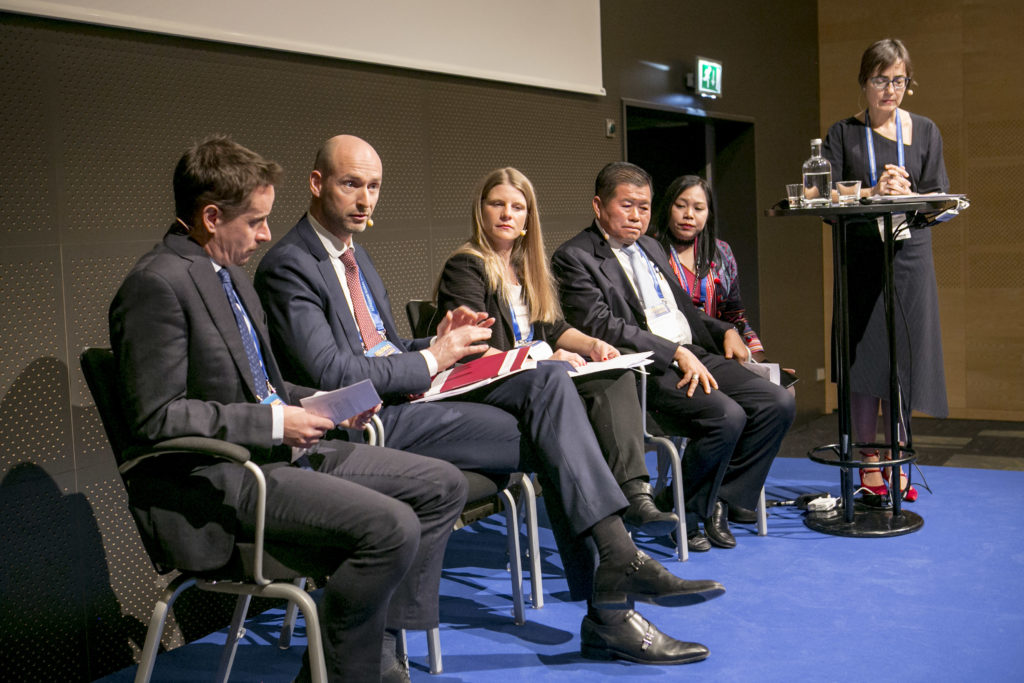
The honourable Deputy Minister Mr. Niphon Bunyamanee from the Ministry of Interior of the Government of Thailand exchanged with experts from Africa, Chile and with IMMA’s Secretary General, Mr. Edwin Bastiaensen during the session on Safety of Powered Two Wheelers of the Global Ministerial Conference in Stockholm in February 2020.
IMMA’s Four Pillar Approach on Motorcycle Safety was presented during United Nations WP.1 Conference in Stockholm
On 18 February 2020, IMMA’s Road Safety Working Group Chairman, Mr Takeshi Ibaraki gave a keynote presentation at the WP.1 Global Road Safety forum conference in Stockholm. The WP.1 conference ‘Legal framework governing the international application of emerging automotive technologies’ was held as an official pre-event Global Ministerial Conference on Road Safety, sponsored by the United Nations Economic Commission for Europe (UNECE) and the Russian Federation.
The Amendment 4 to GTR2 was published – A major step forward for harmonisation of motorcycle emission standards
One of the key updates in this Amendment to GTR No. 2 was the expansion of the scope providing possibility for two-wheeled vehicles with a design speed under 50 km/h and with an engine capacity under 50 cc to be tested with the GTR 2 test cycle profile (WMTC), with a 10 minutes cold engine phase followed by a 10 minutes warm engine phase. The test speeds would be capped to the maximum design speeds of these vehicles.
IMMA Organized A Side-Event At The International Transport Forum Summit In Leipzig On 24th May 2019
On the 24th of May 2019, IMMA organized an official side-event at the 2019 Summit of the International Transport Forum in Leipzig, co-hosted by FIM.
Geneva, 178th Session Of WP.29 – World Forum For The Harmonization Of Vehicle Regulations
IMMA introduced its latest publication: “Safer Motorcycling: The Global Motorcycle Industry’s Approach to Road Safety” (click to download) and hosted the WP.29 cocktail held on 26th June at the Restaurant des Délégués in the Palais. A group picture was taken with all the WP.29 delegates on the 25th of June (click to download high resolution picture).
Election Of Mr Rakesh Sharma, Executive Director, Bajaj Auto As IMMA’s New Vice President
Out of the representation of its member SIAM, Society of Indian Automobile Manufacturers, the International Motorcycle Manufacturers Association (IMMA), elected Mr Rakesh Sharma, Executive Director, Bajaj Auto as its Vice President, during its Annual General Assembly held on 8th May 2019 at Yogyakarta, Indonesia.
IMMA Welcomes Abraciclo As Its Newest Member, July 2018
A new member will join IMMA as of July 1st 2018: The Brazilian Association of Manufacturers of Motorcycle, Moped, Bicycles and Similar – Abraciclo.
IMMA Organised ‘Sharing The Road For Safer Motorcycling’ With CMC During The International Transport Forum Summit
IMMA and the Connected Motorcycle Consortium (CMC) organised ‘Sharing the Road for Safer Motorcycling’ ITF Open Stage Café session during the 2018 edition “Transport Safety and Security” of the International Transport Forum Summit in Leipzig, Germany.